
Ethics, Duties, and the MPRE
Ethics, Duties, and the MPRE
Legal treatise · Professional Responsibility
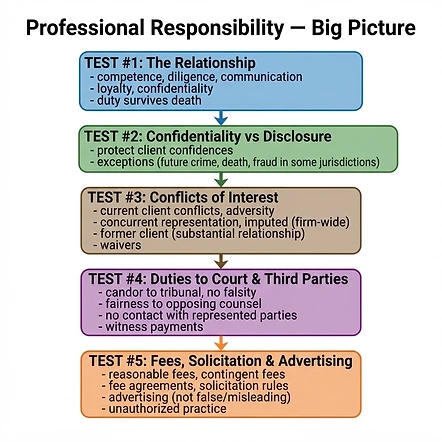
The Attorney-Client Relationship
The relationship is formed when a client reasonably believes it exists. A lawyer must provide competent representation, which includes the necessary legal knowledge, skill, thoroughness, and preparation. A lawyer must also act with diligence and keep the client reasonably informed. A lawyer must follow the client’s decisions concerning the objectives of representation, such as whether to settle or enter a plea.
Confidentiality and Privilege
The duty of Confidentiality is broader than the attorney-client privilege; it covers all information relating to the representation. A lawyer may disclose confidential information if the client gives informed consent, if disclosure is impliedly authorized to carry out the representation, or to prevent reasonably certain death or substantial bodily harm. Other exceptions include preventing a client from committing a crime or fraud that will result in substantial financial injury, using the lawyer's services.
Conflicts of Interest
A lawyer must avoid conflicts that interfere with professional judgment. Concurrent conflicts arise when representation of one client is directly adverse to another, or there is a significant risk that the representation will be materially limited. A lawyer can often cure a conflict with Informed Consent from all affected parties, provided the lawyer reasonably believes they can provide competent and diligent representation. Conflicts can be imputed to the entire law firm.
Fees and Client Property
Fees must be reasonable. A fee agreement should be communicated to the client, preferably in writing. Contingency fees are generally allowed, except in criminal or domestic relations cases. All property belonging to a client must be kept separate from the lawyer’s own property in a Trust Account (IOLTA). Lawyers must maintain complete records and promptly deliver property to the client upon request.
Duty to the Court and Third Parties
A lawyer has a duty of candor toward the tribunal, meaning they must not knowingly make false statements of fact or law or fail to correct such statements. If a client intends to commit perjury, the lawyer must attempt to dissuade them and, if unsuccessful, may have to seek to withdraw or, in some cases, disclose. When dealing with third parties, lawyers must be truthful and cannot communicate with a person they know to be represented by counsel regarding the subject of the representation without consent.